 Add to Chrome
 Add to Firefox
 Add to Edge
Differentiable Geometric Indexing for End-to-End Generative Retrieval
Mar 11, 2026
Generative Retrieval (GR) has emerged as a promising paradigm to unify indexing and search within a single probabilistic framework. However, existing approaches suffer from two intrinsic conflicts: (1) an Optimization Blockage, where the non-differentiable nature of discrete indexing creates a gradient blockage, decoupling index construction from the downstream retrieval objective; and (2) a Geometric Conflict, where standard unnormalized inner-product objectives induce norm-inflation instability, causing popular "hub" items to geometrically overshadow relevant long-tail items. To systematically resolve these misalignments, we propose Differentiable Geometric Indexing (DGI). First, to bridge the optimization gap, DGI enforces Operational Unification. It employs Soft Teacher Forcing via Gumbel-Softmax to establish a fully differentiable pathway, combined with Symmetric Weight Sharing to effectively align the quantizer's indexing space with the retriever's decoding space. Second, to restore geometric fidelity, DGI introduces Isotropic Geometric Optimization. We replace inner-product logits with scaled cosine similarity on the unit hypersphere to effectively decouple popularity bias from semantic relevance. Extensive experiments on large-scale industry search datasets and online e-commerce platform demonstrate that DGI outperforms competitive sparse, dense, and generative baselines. Notably, DGI exhibits superior robustness in long-tail scenarios, validating the necessity of harmonizing structural differentiability with geometric isotropy.

Constraint-Aware Generative Auto-bidding via Pareto-Prioritized Regret Optimization
Feb 09, 2026Auto-bidding systems aim to maximize marketing value while satisfying strict efficiency constraints such as Target Cost-Per-Action (CPA). Although Decision Transformers provide powerful sequence modeling capabilities, applying them to this constrained setting encounters two challenges: 1) standard Return-to-Go conditioning causes state aliasing by neglecting the cost dimension, preventing precise resource pacing; and 2) standard regression forces the policy to mimic average historical behaviors, thereby limiting the capacity to optimize performance toward the constraint boundary. To address these challenges, we propose PRO-Bid, a constraint-aware generative auto-bidding framework based on two synergistic mechanisms: 1) Constraint-Decoupled Pareto Representation (CDPR) decomposes global constraints into recursive cost and value contexts to restore resource perception, while reweighting trajectories based on the Pareto frontier to focus on high-efficiency data; and 2) Counterfactual Regret Optimization (CRO) facilitates active improvement by utilizing a global outcome predictor to identify superior counterfactual actions. By treating these high-utility outcomes as weighted regression targets, the model transcends historical averages to approach the optimal constraint boundary. Extensive experiments on two public benchmarks and online A/B tests demonstrate that PRO-Bid achieves superior constraint satisfaction and value acquisition compared to state-of-the-art baselines.
Thinking Broad, Acting Fast: Latent Reasoning Distillation from Multi-Perspective Chain-of-Thought for E-Commerce Relevance
Jan 29, 2026Effective relevance modeling is crucial for e-commerce search, as it aligns search results with user intent and enhances customer experience. Recent work has leveraged large language models (LLMs) to address the limitations of traditional relevance models, especially for long-tail and ambiguous queries. By incorporating Chain-of-Thought (CoT) reasoning, these approaches improve both accuracy and interpretability through multi-step reasoning. However, two key limitations remain: (1) most existing approaches rely on single-perspective CoT reasoning, which fails to capture the multifaceted nature of e-commerce relevance (e.g., user intent vs. attribute-level matching vs. business-specific rules); and (2) although CoT-enhanced LLM's offer rich reasoning capabilities, their high inference latency necessitates knowledge distillation for real-time deployment, yet current distillation methods discard the CoT rationale structure at inference, using it as a transient auxiliary signal and forfeiting its reasoning utility. To address these challenges, we propose a novel framework that better exploits CoT semantics throughout the optimization pipeline. Specifically, the teacher model leverages Multi-Perspective CoT (MPCoT) to generate diverse rationales and combines Supervised Fine-Tuning (SFT) with Direct Preference Optimization (DPO) to construct a more robust reasoner. For distillation, we introduce Latent Reasoning Knowledge Distillation (LRKD), which endows a student model with a lightweight inference-time latent reasoning extractor, allowing efficient and low-latency internalization of the LLM's sophisticated reasoning capabilities. Evaluated in offline experiments and online A/B tests on an e-commerce search advertising platform serving tens of millions of users daily, our method delivers significant offline gains, showing clear benefits in both commercial performance and user experience.
ACE-BERT: Adversarial Cross-modal Enhanced BERT for E-commerce Retrieval
Dec 14, 2021

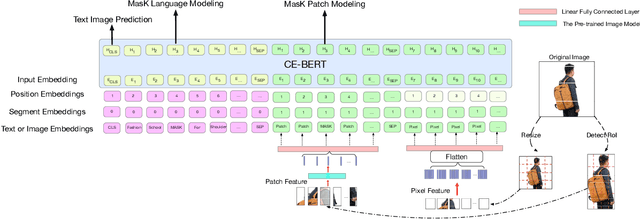
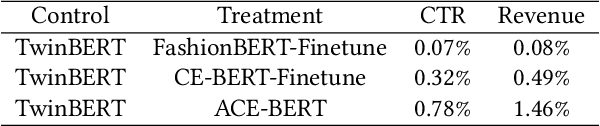
Nowadays on E-commerce platforms, products are presented to the customers with multiple modalities. These multiple modalities are significant for a retrieval system while providing attracted products for customers. Therefore, how to take into account those multiple modalities simultaneously to boost the retrieval performance is crucial. This problem is a huge challenge to us due to the following reasons: (1) the way of extracting patch features with the pre-trained image model (e.g., CNN-based model) has much inductive bias. It is difficult to capture the efficient information from the product image in E-commerce. (2) The heterogeneity of multimodal data makes it challenging to construct the representations of query text and product including title and image in a common subspace. We propose a novel Adversarial Cross-modal Enhanced BERT (ACE-BERT) for efficient E-commerce retrieval. In detail, ACE-BERT leverages the patch features and pixel features as image representation. Thus the Transformer architecture can be applied directly to the raw image sequences. With the pre-trained enhanced BERT as the backbone network, ACE-BERT further adopts adversarial learning by adding a domain classifier to ensure the distribution consistency of different modality representations for the purpose of narrowing down the representation gap between query and product. Experimental results demonstrate that ACE-BERT outperforms the state-of-the-art approaches on the retrieval task. It is remarkable that ACE-BERT has already been deployed in our E-commerce's search engine, leading to 1.46% increase in revenue.
Optimal Delivery with Budget Constraint in E-Commerce Advertising
Oct 08, 2019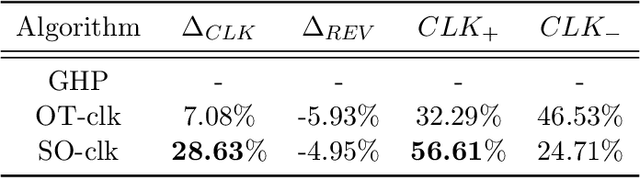
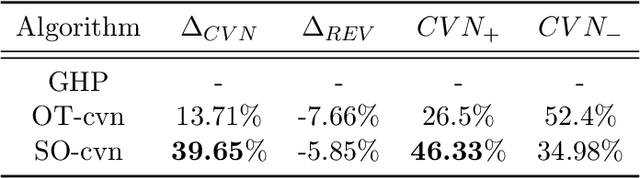
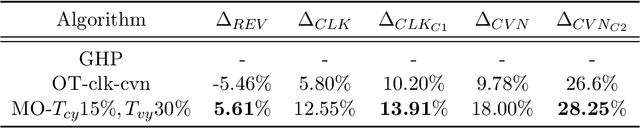
Online advertising in E-commerce platforms provides sellers an opportunity to achieve potential audiences with different target goals. Ad serving systems (like display and search advertising systems) that assign ads to pages should satisfy objectives such as plenty of audience for branding advertisers, clicks or conversions for performance-based advertisers, at the same time try to maximize overall revenue of the platform. In this paper, we propose an approach based on linear programming subjects to constraints in order to optimize the revenue and improve different performance goals simultaneously. We have validated our algorithm by implementing an offline simulation system in Alibaba E-commerce platform and running the auctions from online requests which takes system performance, ranking and pricing schemas into account. We have also compared our algorithm with related work, and the results show that our algorithm can effectively improve campaign performance and revenue of the platform.